
- Home
- TopicsTopics
- By LocationBy Location
- Newsletter
- Podcast
- About
- Connect
- Restore Hope

A domestic violence call comes in. Are there weapons? Are children in danger? Who is the aggressor? Who needs protection? Within moments, a police officer must assess the danger and decide what can legally be done.
But the signs of abuse aren't always visible. And the person who needs help may be too afraid to ask for it.
Officer Blake Scott, a Shield Our Youth officer who works with juveniles and families in Fort Smith, explained that responding to domestic violence is rarely as simple as identifying an aggressor and making an arrest. Victims may be afraid to speak, involving law enforcement can escalate an already dangerous situation, and even when officers recognize that someone is in danger, there are limits to what they can do.
These are the complicated realities families experiencing domestic violence face every day, and challenges no single organization can address alone.
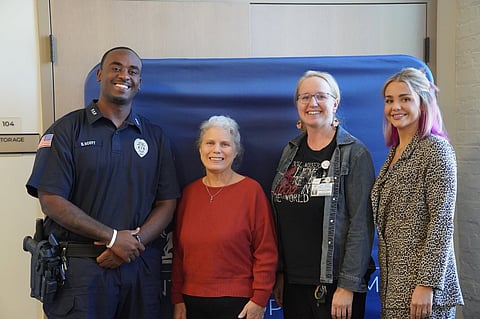
At a recent Sebastian County 100 Families Alliance meeting, professionals from law enforcement, victim advocacy, social services and education discussed the warning signs of domestic violence, barriers to seeking help and how community partners can better support those experiencing abuse.
Safety is one of 13 areas assessed when individuals and families enroll in the 100 Families Initiative. While the initiative helps families move from crisis to stability and ultimately toward career and independence, progress can be difficult when someone is living in fear.
Domestic violence can affect a person's ability to maintain employment, build financial independence, establish healthy relationships or provide a stable environment for their children. Even when resources are available, fear and control can prevent someone from accessing them.
Addressing safety begins with understanding that domestic violence does not always look the way people expect.
Marguerite Nobles, an anti-human trafficking specialist and victims' advocate at the Crisis Intervention Center, explained that many people do not recognize they are experiencing abuse, particularly when there are no physical injuries.
"It doesn't have to be physical. It can be emotional. It can be financial. It can be mental. It doesn't have to be physical."
Nobles described the cycle of abuse, which often begins with building tension, followed by an abusive incident, reconciliation and a period of calm. During reconciliation, an abusive partner may apologize, promise to change or overwhelm the victim with affection.
Sometimes that calm lasts days or months. Other times, it can last years.
Over time, manipulation and emotional abuse can damage a person's self-esteem and distort their understanding of healthy relationships. Isolation from friends and family makes it even harder to recognize the abuse or find a way out.
Scott said isolation is one of the biggest warning signs officers encounter during domestic violence calls. He also emphasized that officers are trained not to ask victims why they don't simply leave.
"People think it's easy to leave until you're in that situation," he explained.
Financial dependence, fear of retaliation, limited support systems and concerns about children can make leaving incredibly difficult. Understanding those barriers is essential for anyone trying to help.
Samantha Holland, director of case management at Jessie's House, which provides shelter for LGBTQ+ young adults ages 18 to 24, discussed additional challenges members of the LGBTQ+ community may face when seeking help.
Holland explained that patterns of abuse are often the same regardless of gender or sexual orientation. Financial control, surveillance, manipulation and isolation are common across abusive relationships.
An additional means of maintaining control for a queer individual could be an abusive partner threatening to reveal someone's sexual orientation to family members who do not know or may not be accepting. This can further isolate victims from their support systems.
Even when someone is ready to seek help, fear of not being believed can prevent them from reporting abuse. Holland explained that bias and stereotypes about LGBTQ+ individuals can compound those fears.
"I think there's also a misconception that gay men or women are more dramatic, and they might just come off that way, and we have to really check our unconscious biases and make sure that we're not falling for those and that we're treating everybody the same."
People experiencing abuse need to know they will be taken seriously and treated with dignity.
Young people can experience many of the same patterns of manipulation, intimidation and control in dating relationships, sometimes without recognizing what is happening.
Liz Kahler, a social worker with Fort Smith Public Schools who works alongside the district's police department on behavioral threat assessments, shared how schools can identify warning signs and provide support.
Changes in behavior, attendance problems, withdrawal from activities and isolation from friends can indicate an unhealthy relationship. Technology creates additional opportunities for control, with constant communication through phones and social media making it difficult for young people to establish boundaries, even outside of school.
School staff may also recognize concerns through student conversations, behavioral threat assessments or alerts from searches on school-issued devices.
But recognizing warning signs is only the beginning.
Building trust with students and families creates opportunities for them to share what is happening when they feel ready. Kahler emphasized that an adult's response to a disclosure can determine whether a young person feels comfortable asking for help again.
"Don't just say, 'Oh, you can't be with him anymore,' try to cut them off totally," she advised.
Instead, adults should focus on concerning behaviors, listen without judgment and keep communication open.
Holland described a similar challenge among the young adults she serves, referring to the "Romeo and Juliet effect." The more someone is told they cannot be with a partner, the more determined they may become to defend the relationship.
Nobles added that criticizing an abusive partner can unintentionally strengthen the abuser's control. The partner may use those criticisms to convince the victim that friends and family do not understand their relationship or have turned against them.
For parents, educators and other trusted adults, maintaining a connection can be more effective than demanding an immediate decision.
Nobles explained that leaving an abusive relationship is often a process rather than a single decision. Some survivors make multiple attempts before they are able to remain separated from an abusive partner.
And leaving can be one of the most dangerous times.
When asked about the difference between supporting someone and pressuring them before they are ready, Nobles offered a simple answer:
"Listening. You have to be there to listen."
Friends, family members and service providers can help by remaining available, offering resources and developing safety plans. Those plans may include securing important documents, medications and necessities, identifying trusted contacts and understanding how technology could be used to track someone.
At the Crisis Intervention Center, advocates help survivors navigate these decisions while connecting them with shelter, housing, benefits and other resources.
The goal is not to take control of someone's life, but to help them regain it.
“For so long they haven't been able to make a choice," says Nobles, "and it is a huge thing for them to make a choice and my job is not to take it from them.”
That same principle guides the work of law enforcement.
Scott explained that officers must establish probable cause before making an arrest. When evidence does not support an arrest, they can still provide information and connect people with services.
Officers must balance protecting someone with respecting their rights. They cannot force someone to leave a relationship or accept services simply because others believe it would be best. Instead, they gather information, respond when the law allows and make sure people know where to turn for help.
For families with children, schools can be another important partner in safety planning.
Kahler shared examples of helping parents preparing to leave abusive relationships connect with shelters or navigate the process of seeking an order of protection. This also meant communicating with appropriate school personnel when there were concerns that an abusive parent might attempt to pick up children as a means of maintaining control.
These relationships between schools, families, law enforcement and community resources can make a significant difference when someone is ready to seek safety.
While law enforcement often responds in moments of crisis, Scott reminded the community partners gathered at the meeting that lasting change depends on their collective work.
"Yeah, we respond to the calls, but it's everybody in this room that is the change and for the change for these people."
For someone experiencing domestic violence, that collaboration can mean the difference between having nowhere to turn and knowing there are people ready to help.
Smart Justice is a magazine, podcast, and continuing news coverage from the nonprofit Restore Hope and covers the pursuit of better outcomes on justice system-related issues, such as child welfare, incarceration, and juvenile justice. Our coverage is solutions-oriented, focusing on the innovative ways in which communities are solving issues and the lessons that have been learned as a result of successes and challenges.
The podcast is available on all major podcasting platforms.
Subscribe to the Smart Justice newsletter.
