
- Home
- TopicsTopics
- By LocationBy Location
- Newsletter
- Podcast
- About
- Connect
- Restore Hope

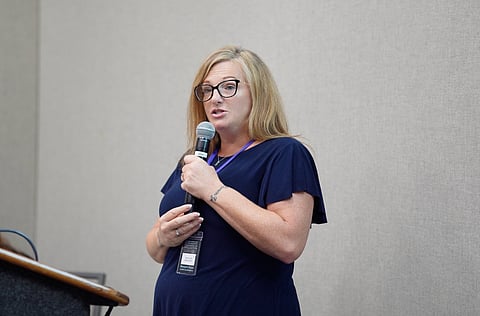
Natalie Edwards is a family advocate for the 10:33 Initiative in Pulaski County.
Natalie is also a mom.
A mom who battled addiction for years. A mom whose four children spent more than three years in foster care. A mom who doesn't just know what crisis looks like. She knows what crisis feels like.
Now, five years sober and reunited with all four of her children, she spends her days walking alongside other parents facing many of the same fears she once carried.
She knows what it feels like to ask for help.
So when Natalie presented to service providers, case managers, social workers, and community leaders during her breakout session at the Restore Hope Training Academy, she turned out the lights and asked everyone to close their eyes.
"Close your eyes and envision you didn't sleep last night. Your lights are scheduled to be disconnected tomorrow. Your child is in foster care. You haven't answered the phone because you're ashamed. You don't know even how you're going to buy groceries. Every knock at the door lately has brought bad news. Someone is standing outside. They have a clipboard. You don't know if they're here to help you or judge you."
When attendees opened their eyes, Edwards asked a simple question.
"What did you hope that that person would say first?"
Edwards hopes that the first words that person hears would be words of empathy and comfort rather than a list of tasks or policies. She reminds providers that participants are more than a consent form, an assessment, or an action plan.
Those tools matter. But the way that person feels in those first few moments can shape everything that follows.
"That feeling right there," she said, "that's your first line of intervention."
The first meeting has the power to alter the trajectory of an entire family's future. And that is why the goal can't just be to complete paperwork, but to begin a relationship.
"Our goal isn't just to finish the assessment. It's to earn their permission for them to come back."
She encouraged advocates to focus first on building that trust by listening more than they speak, staying curious, celebrating small victories, and consistently showing up for the people they serve.
As Edwards explained, "People don't always refuse services. Sometimes they refuse the relationships that do not feel safe."
As someone who has sat on both sides of the desk, Natalie knows that every participant who walks through the door is asking one silent question:
Can I trust you?
"If we answer that question well," she says, "then the rest of the work becomes possible."
That isn't simply Natalie's personal belief. It is a foundational principle of the Restore Hope Model.
Advocates using the model are trained to see beyond assessments, action plans, and referrals. This relationship-driven approach to intake and case management helps participants feel seen, heard, and empowered rather than defined by their crisis.
By building trust first, advocates help families rediscover hope and the belief that change is possible. That hope becomes the fuel for action, giving participants the confidence to pursue their goals, overcome barriers, and continue moving from crisis to career.
This compassionate methodology is helping communities achieve measurable outcomes because people are more likely to stay engaged, be honest about the challenges they face, and remain committed to the work when they know someone is walking alongside them.
Smart Justice is a magazine, podcast, and continuing news coverage from the nonprofit Restore Hope and covers the pursuit of better outcomes on justice system-related issues, such as child welfare, incarceration, and juvenile justice. Our coverage is solutions-oriented, focusing on the innovative ways in which communities are solving issues and the lessons that have been learned as a result of successes and challenges.
The podcast is available on all major podcasting platforms.
Subscribe to the Smart Justice newsletter.
