
- Home
- TopicsTopics
- By LocationBy Location
- Newsletter
- Podcast
- About
- Connect
- Restore Hope

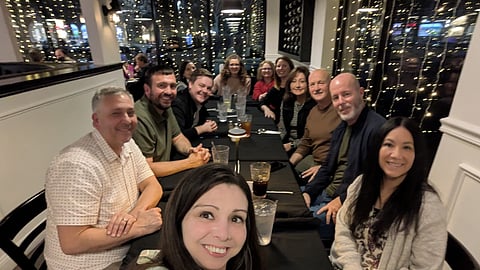
Jason Johnson, Director of Strategic Initiatives with the Christian Alliance for Orphans (CAFO), visited Little Rock to lead a conversation on strengthening how Arkansas recruits, supports, and sustains foster families by building deeper, more aligned community partnerships. With a background in ministry leadership, church mobilization, and firsthand foster care experience, Johnson brings a unique blend of strategy, passion, and practical insight to mobilizing communities around foster care support.
The gathering brought together leaders working at the intersection of foster care, outreach, and community engagement, including staff from Compact, The CALL, The Contingent, Connected Families, the Governor’s Office, and Every Child Arkansas. While Johnson guided much of the conversation, Dr. Phil Goad—who serves on the Executive Leadership Council for Every Child Arkansas—also helped facilitate discussion, grounding big-picture vision in the realities of local implementation across Arkansas communities.
Rather than centering on traditional recruitment tactics, the conversation challenged participants to rethink how foster care is introduced to communities—particularly to businesses, healthcare systems, and schools. The emphasis was not on asking partners to do something for foster care, but on inviting them to be something alongside it. That distinction reframed foster care not as a standalone cause, but as a shared mission that can align naturally with the values and goals partners already hold.
For Sarah Grimes, Central Outreach Coordinator with Every Child Arkansas, the discussion reinforced an important mindset shift: effective alliances are not organizations competing for attention, but networks designed to come alongside existing institutions and help foster care become an extension of their culture and purpose. When partners can see how foster care fits within their mission, engagement becomes more authentic—and more sustainable.
That idea resonated across the room. Participants reflected on how meaningful collaboration is built not by increasing the number of asks, but by creating shared experiences and tangible entry points—moments where partners can see, feel, and understand the impact of foster care in ways that connect to their own priorities. Once that connection is made, the impact is difficult to ignore.
Andrew Ramsey, Northwest Arkansas Outreach Coordinator with Every Child Arkansas, reflected on the importance of maintaining a network-driven approach. Every Child Arkansas exists as a statewide alliance—one that succeeds only through collaboration, shared ownership, and collective leadership across sectors. Ramsey noted, “Jason’s insights helped our team begin refining what we are doing across the state—building a foster care ecosystem through deep community partnerships in every sector that wants to support their foster families.”
One idea from the conversation that resonated strongly with participants was the reminder that “the quality of our engagement is equal to the quality of our follow-through.” This point made by Johnson underscored a recurring theme of the meeting: trust is built not only through vision and invitation, but through consistency, reliability, and action.
Lynette Place, outreach coordinator with Every Child Arkansas over the South Central Region, added that Johnson’s guidance helped clarify the boundaries and strengths of a network-based model. Rather than drifting into the role of a traditional organization, the focus remains on connection, alignment, and empowering others to carry shared vision forward. Johnson also encouraged participants to look beyond surface-level objections when engaging new partners, urging them to identify “the thing beneath the thing”—the deeper motivations, concerns, or values that influence how different sectors respond.
Following the conversation, participants expressed a shared hope for the future of foster care in Arkansas: one where more than enough families step forward, where every sector of the community rallies around those families, and where children are able to remain in their own communities, schools, and support systems whenever possible. Through aligned partnerships and sustained collaboration, leaders envision a statewide paradigm shift—one where foster care is no longer seen as someone else’s responsibility, but as a shared opportunity to create lasting impact for children and families across Arkansas.
Smart Justice is a magazine, podcast, and continuing news coverage from the nonprofit Restore Hope and covers the pursuit of better outcomes on justice system-related issues, such as child welfare, incarceration, and juvenile justice. Our coverage is solutions-oriented, focusing on the innovative ways in which communities are solving issues and the lessons that have been learned as a result of successes and challenges.
The podcast is available on all major podcasting platforms.
Subscribe to the Smart Justice newsletter.
