
- Home
- TopicsTopics
- By LocationBy Location
- Newsletter
- Podcast
- About
- Connect
- Restore Hope

In Crawford County, transportation has become one of the biggest barriers preventing families from moving from crisis to stability.
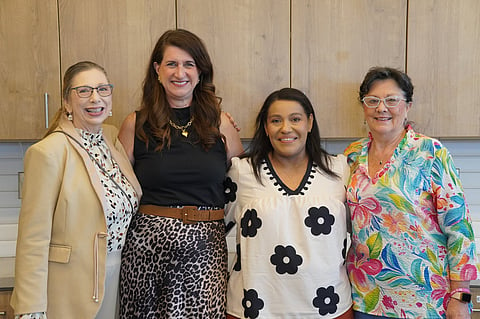
At Simmons Foods, Human Resources Manager Deysi Mendez sees that reality every day.
This year alone, 62 employees at her site recorded a no car/no show.
"There is always a story behind it," Mendez believes and so she dug deeper to find out the reasons behind her staff failing to show up to work. A large percent of them had transportation related issues.
On any given shift, an average of seven to ten employees arrive by Uber or Lyft, often paying $18 to $20 each way for a single ride to work. That doesn't include employees relying on family members or friends for transportation.
For those who can't afford an Uber or don't have a reliable support system, the only option is often to walk.
In the River Valley, that isn't simply inconvenient. Fort Smith is surrounded by the Arkansas River, and many of the bridges connecting the surrounding rural communities were never designed to safely accommodate pedestrians or cyclists.
Reese Brewer, Director of the Frontier Metropolitan Planning Organization, says the greatest transportation barriers aren't always the ones people expect.
"The barriers are oftentimes not just financial, not just mental, not just emotional, but physical. There's a river."
For Simmons Foods, addressing these barriers isn't simply about improving attendance. It's about reducing turnover, increasing employee retention, and helping employees continue their education and earn certifications that lead to higher wages and a better quality of life.
Dr. Debbie Faubus, Director of the Crawford County Adult Education Center, partners with Simmons Foods to provide workforce training, industry certifications that can lead to higher wages, alternative sentencing programs, and educational opportunities for adults working to build a better future.
But first, they have to get there.
For Dr. Faubus, transportation is rarely the only challenge someone is facing. She believes lasting solutions begin with building relationships and taking the time to understand what is happening beneath the surface.
"Theres always more than one need."
She says those needs often aren't discovered until people have the opportunity to meet face-to-face and build trust. Only then can they identify the barriers that are keeping someone from moving forward.
"So it's just good economics, just like it's good economics what you're talking about. The more we can do, you know, for people to get them where they need to be, it's good for the county as a whole. It's good for all of us."
The question was no longer whether transportation was a problem.
The question was whether a community could come together to solve it.
During a Crawford County 100 Families Alliance meeting, Jennifer Hallum, CEO of the Area Agency on Aging of Western Arkansas, listened as employers, educators, and service providers all identified transportation as one of the greatest obstacles facing the people they served.
"I go to a lot of meetings of different people and ideas in the communities, and this is the first time that, number one, there's a vision, there's data, but also a willingness for everyone to collaborate."
Her organization had operated a transportation system helping older adults reach medical appointments for more than 30 years, but the vehicles weren't being used to capacity.
"If my assets are sitting," she said, "they're not generating either impact or money...And so I began to think, what could we do?"
All it took was a conversation and a willingness to try something new. That conversation became the beginning of a transportation pilot launched in April.
What started as a simple commitment to work together has become proof that collaboration can uncover solutions that already exist within a community.
"I just saw people who were really all about lets come together."
The partnership works because every organization contributes what it does best.
Referrals come through the Crawford County 100 Families Alliance, where participants receive intentional, voluntary case management before transportation is ever scheduled.
The Area Agency on Aging has vehicles and drivers, but not the capacity to walk alongside every participant, understand their circumstances, or build an individualized plan. Through partnerships with 100 Families, Adult Education, Simmons Foods, and others, participants are prepared before the ride ever happens.
Transportation is no longer a ride from one location to another. It becomes a stepping stone toward long-term stability.
While cancellations and no-shows still occur, participants are far more likely to be prepared, arrive on time, and use each opportunity to move closer to self-sufficiency.
Hallum emphasized that the goal isn't to provide transportation forever. It's to help people retain employment until they can purchase and maintain reliable transportation on their own. Future plans even include exploring a first-car program for participants who remain committed to their action plans.
"The way to do this and for it to be sustainable," she says, "is through collaboration."
The pilot has already provided 59 rides, with many participants having since secured employment.
As the pilot continues to grow, so does the vision.
Reese Brewer's organization specializes in securing grants and developing regional transportation systems.
But this project is also deeply personal.
As a college student raising three children under the age of four without a car, Brewer experienced firsthand how limited transportation can affect every part of life.
Today, she and her organization are pursuing grants that could expand transportation options and build solutions that continue long after the current pilot ends.
"We've kind of doubled our energy by just working and collaborating together."
Brewer sees employers becoming even more engaged, pointing to businesses like Simmons Foods as examples of how the private sector can help create lasting transportation solutions for their workforce.
Dr. Faubus believes mechanics, school districts, and school counselors all have an important role to play.
Crawford County is demonstrating that the solution begins when existing partners gather around the same table, share what they already have, and commit to solving a problem together.
As the meeting concluded, Becky Petty challenged everyone in the room to continue expanding the partnership.
"Bring your people. Bring the bankers and the mechanics. We need more voices. More connections. Thats what collaboration is. Lets talk and lets take some action and lets get to work."
Smart Justice is a magazine, podcast, and continuing news coverage from the nonprofit Restore Hope and covers the pursuit of better outcomes on justice system-related issues, such as child welfare, incarceration, and juvenile justice. Our coverage is solutions-oriented, focusing on the innovative ways in which communities are solving issues and the lessons that have been learned as a result of successes and challenges.
The podcast is available on all major podcasting platforms.
Subscribe to the Smart Justice newsletter.
